






COMMERCIAL BET DUE DILIGENCE FOR CYBERSECURITY CEOs
The most expensive mistake isn’t a breach. It’s the confident commercial decision made without scrutiny.
Before You Hire, Expand Services, Or Bet On A Vendor Platform — Run Due Diligence on the Commercial Bet.
Independent GTM diligence for cybersecurity vendors, cloud security firms, and MSSPs at $3m–$25m revenue. One bet. 14 days. A verdict you can defend to your board.
INVESTMENT
$3,500 (£2,500)
TIMELINE
14 days
FORMAT
CEO-only
OUTCOME
Go/Hold/Stop
Delivered by the former Vice President, Marketing, Symantec
Serving Cybersecurity Companies Across North America & EMEA.
$30 Billion in Tech Solutions Sold Across 100+ Countries
30+ Tech Companies Transformed
Average 35% Pipeline Growth Within 4 Months
The market has fundamentally shifted — and the old playbook is now a liability.
The cybersecurity landscape of 2025 is unrecognisable from even two years ago. If you’re still making commercial decisions based on 2022 assumptions, you’re exposed.
If you’re a cybersecurity or cloud security vendor:
- Platform consolidation is accelerating. 75% of enterprises are now actively consolidating vendors — up from 29% in 2020. By 2028, 45% will use fewer than 15 security tools. Palo Alto, CrowdStrike, and Microsoft are absorbing categories you compete in.
- Enterprise buyers are shortlisting fewer vendors. The era of 'best of breed' is ending. Buyers want integrated platforms, not point solutions — and they're making decisions faster with smaller shortlists.
- The majority of first VP Sales hires fail. Industry data confirms what you've likely witnessed: most VP Growth and VP Sales hires at the scaling stage don't make it past 18 months. The cost isn't just the salary — it's the 12 months of misdirection.
- Channel partnerships are becoming traps. MSSPs you're betting on for distribution are facing their own existential pressures. Many will be acquired, consolidated, or pivoted within 24 months.
If you’re an MSSP:
- Your vendors are becoming your competitors. Large tool providers are entering the managed services space. CrowdStrike, Palo Alto, and Microsoft are all launching direct-to-customer managed offerings. This isn't a distant threat — it's happening now.
- Talent costs have broken your margin model. L2 analyst costs are up 25-30% year-over-year. SOC analyst turnover at MSPs lacking automation is 70% higher than at mature MSSPs. Your 2023 margin assumptions are already obsolete.
- Everyone is launching MDR. The MDR market is growing at 20%+ CAGR, but that growth is attracting every competitor you have. Differentiation is harder than ever, and vendor-direct MDR is fragmenting your addressable market.
- Single-vendor dependency is now existential risk. Standardising on a vendor platform that may go direct isn't operational efficiency — it's building your business on someone else's roadmap.
In this environment, the cost of a wrong commercial bet isn’t just money. It’s 6–12 months of misdirection while the market consolidates around you.
The enemy: confident decisions made without due diligence.
These are the decisions that feel like progress but often aren’t:
For Cybersecurity & Cloud Security Vendors:
- Hiring a VP Growth to 'fix the funnel' — when the real issue is late-stage loss to platform players
- Signing channel partnerships without conversion data — because the MSSP's incentives don't align with yours
- Repositioning to escape platform pressure — without validating the new category has buyers
- Moving from SMB to enterprise (or the reverse) — before your motion can support the switch
- Scaling outbound before conversion is proven — burning budget on volume that won't convert
For MSSPs:
- Launching MDR before SOC economics are sound — with utilisation already at 85%+ and no capacity buffer
- Standardising on a vendor platform — that announced a direct managed service offering last quarter
- Hiring enterprise sales before delivery can scale — creating promises your SOC can't keep
- Expanding vCISO services without margin clarity — subsidising consulting with monitoring revenue
- Moving upmarket before talent can support it — with L2 costs up 28% and turnover accelerating
Each of these decisions commits budget, headcount, and credibility for 6–12 months. Each is difficult to reverse once locked in. And each one fails more often than it succeeds when made without diligence.
Treat commercial moves like investment decisions.
When a PE firm evaluates an acquisition, they don’t guess. They run diligence. They pressure-test assumptions. They identify risk before committing capital.
Your commercial bets deserve the same rigour.
Commercial Bet Due Diligence™ applies investment-grade scrutiny to the decisions that shape your next 12 months — whether you’re a vendor deciding on channel strategy, a cloud security firm navigating platform consolidation, or an MSSP deciding on service expansion.
At the End of 14 Days, You'll Know Which is True:
- GO - The bet is sound. Commit with confidence. Here are the guardrails to protect downside.
- HOLD - The bet has merit, but conditions aren't right. Wait, watch these indicators, or adjust scope.
- STOP - The bet will likely fail. Don't proceed. Here's what to do instead.
No hedged recommendations. No 50-page strategy decks. A clear verdict with the reasoning to stand behind it — delivered in 14 days.
What You Bring
Commercial Bet Due Diligence™ is designed for a single, well-defined commercial decision. Not five. Not a ‘general GTM review.’ One bet that’s keeping you up at night.
For Cybersecurity & Cloud Security Vendors:
- Hiring bet: "We're about to hire a VP Sales / VP Growth / Head of Partnerships. Is this the right move, right now — or are we hiring to solve a problem they can't fix?"
- Channel bet: "We're considering an MSSP partnership / VAR agreement / marketplace push. Will the economics and incentives actually work?"
- Positioning bet: "We're thinking about pivoting our category / messaging to escape platform consolidation. Is this defensible — or are we running into a smaller box?"
- ICP bet: "We're moving from mid-market to enterprise (or the reverse). Can our motion, proof points, and sales cycle support this?"
For MSSPs:
- Service expansion bet: "We're about to launch MDR / XDR / vCISO services. Do our SOC economics, utilisation rates, and delivery capacity actually support this?"
- Vendor platform bet: "We're standardising on [vendor] as our core platform. Is this the right long-term play — or are we building dependency on a future competitor?"
- Talent bet: "We're about to hire enterprise sales / expand SOC headcount / bring on a COO. Given current talent costs and turnover rates, is this the right sequence?"
- Market bet: "We're moving from SMB to mid-market / enterprise clients. Can our delivery model, SLAs, and talent base support this without breaking service quality?"
If you’re facing a decision like this — one that commits significant time, money, or credibility — this is what the process is built for.
What You Get in 14 Days
Diligence Brief
A written analysis of the bet — what must be true for it to succeed, what is currently true, and where the gaps are. Covers market context, competitive positioning, conversion physics, and execution requirements specific to your business model.
Risk Map
An explicit catalogue of the risks this bet carries — categorised by severity, likelihood, and mitigation options. For vendors: platform consolidation exposure, channel conflict, enterprise proof-point gaps. For MSSPs: vendor disintermediation risk, talent economics, service margin compression.
The Due Diligence Readout (5–7 pages, board-safe)
A live session to walk through the verdict, the reasoning, and the implications. This is where we discuss the GO, HOLD, or STOP recommendation and what it means for your next 90 days.
Case 1: The VP Growth Hire That Wasn't Ready
The bet: Cloud security vendor CEO (£8m ARR) was about to hire VP of Growth to ‘fix pipeline inconsistency.’
What diligence found: Conversion from meeting to closed-won was 11%. The issue wasn’t pipeline generation — it was late-stage loss to larger platform players. A VP Growth couldn’t fix a differentiation problem.
The verdict: HOLD. Address competitive positioning before scaling the team.
Outcome: Avoided £180k+ in hiring costs and 9 months of misdirection. Repositioned first, then hired — with clearer mandate and higher success probability.
Case 2: The MDR Launch That Needed Sequencing
The bet: MSSP CEO (£5m revenue) was about to launch MDR to ‘move upmarket and improve margins.’
What diligence found: Current SOC was at 87% utilisation. Launching MDR without expansion would degrade existing service quality. Additionally, two of their three core vendor partners had launched competing direct-to-customer MDR offerings in the past 6 months.
The verdict: HOLD. Expand SOC capacity first; evaluate vendor relationships before committing to MDR positioning.
Outcome: Delayed launch by 4 months to build capacity. During delay, renegotiated vendor terms and identified differentiated positioning. Launched with stronger foundation and avoided service delivery crisis.
Case 3: The Channel Partnership That Would Have Backfired
The bet: Cloud security CEO (£6m ARR) was pursuing a major MSSP partnership to accelerate enterprise pipeline.
What diligence found: The MSSP’s service model required significant margin sacrifice (38%), and their sales motion prioritised their own SOC services over vendor solutions. Previous vendors in similar partnerships saw 60% of deals stall in ‘partner purgatory.’
The verdict: STOP. This partnership model doesn’t align with your economics or their incentives.
Outcome: Avoided a 12-month distraction and preserved margin. Redirected to direct enterprise sales with better unit economics.
Case 4: The Vendor Standardisation That Carried Hidden Risk
The bet: MSSP CEO ($9m revenue) was about to standardise on a single vendor platform to simplify operations and improve margins.
What diligence found: The vendor had recently announced a direct-to-customer managed service offering. Their partner programme changes suggested channel deprioritisation. Three other MSSPs in the same geography had already been impacted.
The verdict: STOP. Single-vendor dependency creates unacceptable disintermediation risk. Maintain multi-vendor capability.
Outcome: Avoided lock-in to a vendor actively competing for their clients. Maintained optionality and negotiating leverage.
Why "HOLD" Is Often The Win
In cybersecurity, capital preservation is strategy. The market rewards those who wait for the right moment — not those who move first and course-correct later.
"We were about to sign the SOC expansion lease and commit to 8 new hires. The diligence showed our margin assumptions were based on 2022 talent costs. HOLD saved us from a £400k commitment we couldn't sustain."
A HOLD verdict isn’t a failure. It’s a decision to wait until conditions are right — with clarity on what ‘right’ looks like. Sometimes the most valuable outcome is the bet you don’t make.
Who this is for.
This is built for you if:
- You're a cybersecurity vendor, cloud security firm, or MSSP CEO at 3m–25m revenue
- You're facing a specific commercial decision in the next 30–90 days
- The decision commits significant budget, headcount, or credibility
- You want independent perspective — not another vendor pitch or agency proposal
- You're willing to hear HOLD or STOP if that's the right answer
- You need something you can defend to your board, investors, or leadership team
This is not for you if:
- You want a full GTM strategy or 12-month roadmap
- You need execution support, not just a verdict
- The decision is already made and you want validation
- You're pre-revenue or below 3m ARR/revenue
- You're looking for a fractional CMO engagement
Who Delivers This
This is not junior analysis. It’s senior judgement — applied to one decision.
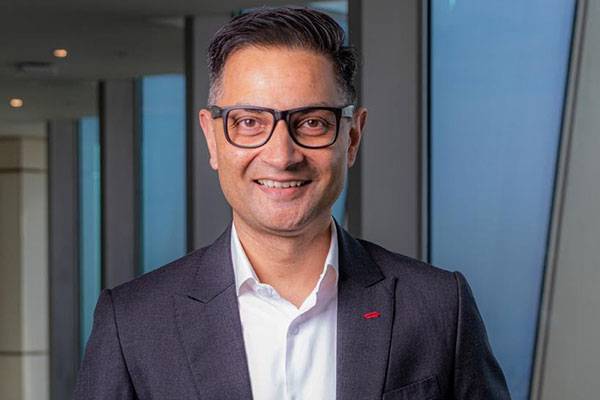
I’m Michael Williamson, fractional CMO and GTM strategist for B2B technology firms:
- former Vice President Marketing, Symantec
- former Chief Marketing & Products Officer, Equifax
- former General Manager, Vodafone Group
- former General Manager, Telefonica
- former Vice President Marketing, Staples
- London Business School MBA
30+ cybersecurity vendors & MSSPs advised | $30B+ technology revenues influenced | 35% average pipeline growth delivered
What the World's Best Tech Executives Say
100% Risk-Free Guarantee
That's the standard. If you finish the Readout and the verdict hasn't sharpened your thinking on this bet — whether GO, HOLD, or STOP — you owe nothing.
This only works if you get clarity. If you don't, I haven't delivered.
Before You Commit, Get the Verdict
I take 3-4 engagements per month.